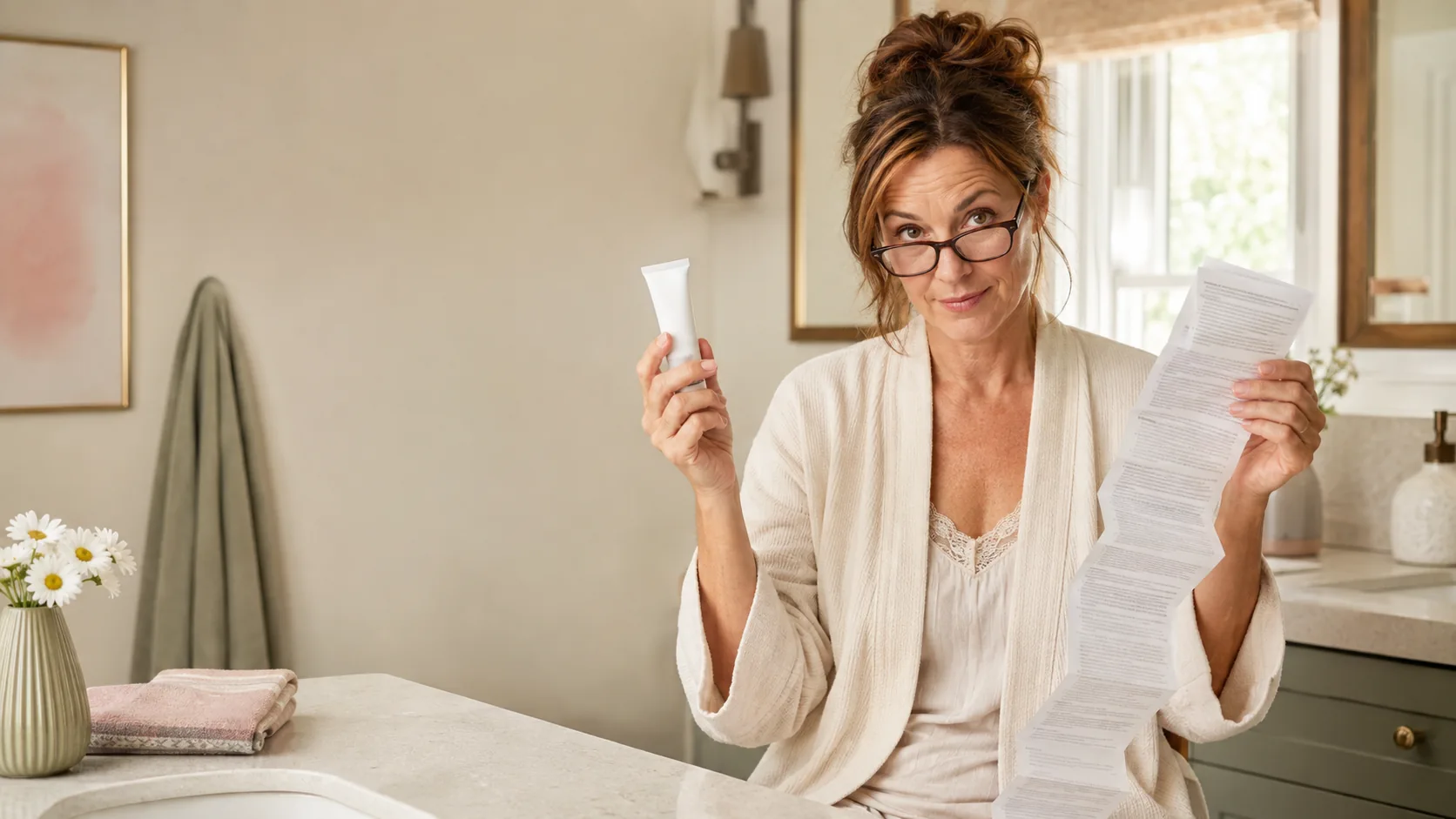
Listen, I'm in my 50s, I've been through the perimenopause wringer, and nobody told me half of what I'm about to tell you. Not my doctor, not my girlfriends, not the internet rabbit holes I disappeared into at 2am wondering why everything felt so different. So consider this the conversation your doctor should have had with you but probably didn't — over coffee, without the clinical detachment, from someone who gets it.
First things first: if you've been avoiding anything hormone-related because HRT feels like a big scary commitment you're not ready for, I completely understand. That decision is yours to make in your own time with your own doctor. But I need you to hear this — vaginal estrogen cream is not the same thing as HRT. Not even close. And that misunderstanding might be costing you more than you realize.
It Stays Right Where You Put It
Here's the thing about vaginal estrogen cream that changed everything for me: it's local. You apply it, it works right there, and it doesn't go flooding through your bloodstream rearranging your hormones the way systemic HRT does. It's a targeted, localized treatment for tissue that desperately needs estrogen to stay healthy — and trust me, that tissue notices when estrogen leaves the building. If it helps, think of it less as hormone therapy and more as a specialized moisturizer for tissue with very specific needs. The estrogen receptors in vaginal tissue are thirsty, and this is exactly what they're thirsty for.
What's Actually Happening Down There, and Why Nobody Warned Us
Real talk. About 84% of women will experience some form of vaginal atrophy as estrogen declines during perimenopause and menopause. Eighty-four percent. That's not a fringe issue — that's most of us. And yet it remains one of the least discussed symptoms of this transition, the kind of thing that doesn't come up until we're already dealing with it and Googling symptoms in a panic at midnight.
Here's what atrophy actually looks like in real life. The skin of the vulva and labia, which used to be resilient, starts to thin and dry until it's almost paper-thin. And paper-thin skin tears. Not dramatically — we're talking tiny, microscopic tears from completely ordinary things like wiping after you use the bathroom, wearing underwear, or having sex. Those little tears become open sores. Then urinating stings. Wiping stings. Sex goes from something you enjoyed to something you dread or avoid entirely.
And it doesn't stop there. Many women start to notice their labia getting smaller. Some lose a significant portion; some lose it almost entirely, because the tissue simply atrophies over time without estrogen support. When the anatomy changes, sensation changes with it. Orgasms become harder to reach, and the whole experience becomes a shadow of what it once was. Meanwhile that natural wetness gets thinner as estrogen drops — less protective, less present, less of everything — so sex becomes uncomfortable not only because of dryness but because thinner lubrication simply doesn't do the job it used to.
"You may have heard about Halle Berry's experience — she had pain and what looked like sores after sex and her doctor initially misdiagnosed her with herpes. That's how alarming these little tears can look when irritated. Her story isn't unusual. It's just famous."
Now Here's the Good News, and I Mean Really Good News
Pay attention to this part, because nobody talks about it enough. When you use vaginal estrogen cream consistently, the moisture comes back — thicker and more protective, the way it used to be. Not just a little relief; real restoration. The skin starts thickening and strengthening again, so it stops tearing from ordinary life. The microtears stop. The burning stops.
Then comes the part that surprises women the most: orgasms return. Not a pale imitation, but back to what you remember, because estrogen in that tissue supports nerve endings and blood flow. And libido can wake back up. A lot of women in perimenopause feel like that part of themselves has gone quiet, and the cream can genuinely reignite it. You may find yourself actually interested again — which, after months or years of not being particularly bothered, feels like a small miracle.
This isn't about vanity or trying to stay young. This is about your comfort, your pleasure, and your quality of life. It's about not wincing every time you use the bathroom and actually enjoying sex again, if that's something that matters to you. It matters. You're allowed to want that.
One honest caveat, because I'd rather you hear it from me than from a marketing email: the over-the-counter products you'll see in the menopause aisle are complements, not substitutes. They don't replace the prescription your doctor writes. That said, the outer skin of the vulva often appreciates extra help between doses or while you're waiting on that appointment. A daily external moisturizer like Kindra Daily V Vaginal Moisturizer Lotion handles everyday dryness, and a barrier balm like VMAGIC Organic Vulva Balm cuts down on friction during intimacy. Some women also ask me about bioidentical estriol body creams such as HelloPharmacist Estriol 5.0 Professional Cream; if you're curious, bring it up with your doctor rather than swapping it in for what you've been prescribed. I've compared all three on our vaginal health support page.
How to Actually Use It, Because That Applicator Is Confusing
Here's the part that drove me absolutely crazy. You get the prescription, the cream arrives with an applicator, and suddenly you're standing in the bathroom completely baffled. Most doctors hand it over and send you on your way without a single word of explanation. Wonderful. Thanks so much. So let me walk you through it the way I wish someone had walked me through it.
For the first couple of weeks — think of it as a loading phase, especially if you're dealing with significant dryness and thinning — use the applicator to apply internally. Front-loading lets the estrogen absorb into deeper tissue and start rebuilding the foundation; you're getting the restoration project started before switching to maintenance mode.
After those first two weeks, most women maintaining vaginal health don't need to insert it internally anymore, and the ongoing routine takes less than a minute. Squeeze a small bead of cream onto your index finger, running it from the tip down to the second crease; that's your dose. Take half of it on your fingertip and run it just inside the vaginal opening, around the rim. Spread the other half all around the vulva and labia — and don't skip the clitoris. That tissue needs love too. That's it: no applicator, no fuss, just a quick once-or-twice-a-week habit that keeps everything healthy and comfortable.
She didn't retire. She just needed a little support.
Find a Doctor Who Actually Gets This
I learned this next lesson the somewhat frustrating way: not all gynecologists are well-versed in hormone therapies, including vaginal estrogen. Some will prescribe the cream and then stare blankly at follow-up questions. It's not great, but it's the reality. The Menopause Society has a directory of certified menopause practitioners at menopause.org — providers who have specifically trained in this area and can have a real, informed conversation with you. If your current doctor can't, it might be worth finding one who can. You deserve that.
Perimenopause hands us a lot of changes to navigate, usually without nearly enough information or support. Vaginal atrophy is one of the most common experiences and one of the least talked about, and that silence has real consequences for real women every single day. Vaginal estrogen cream isn't a big commitment. It isn't scary. It's a simple, local tool that keeps important tissue healthy, brings back moisture and sensation, and, honestly, can bring back a part of yourself you thought had quietly retired. She didn't retire. She just needed a little support.
Talk to your gynecologist. Ask specifically about vaginal estrogen. And if they can't give you a real answer — you know where to find a better one.
~ Verbose Vibes
Going deeper? Perimenopause 101 covers everything you need to know about the hormone transition — symptoms, timelines, and what your body is actually doing. And our Vaginal Health Support Products guide covers products chosen with hormonal health in mind — rated and reviewed honestly.
This post may contain affiliate links. If you purchase through these links, Verbose Publications may earn a small commission at no extra cost to you. We only recommend products we trust and believe provide genuine value to our readers.
Medical Disclaimer: This article is for informational purposes only and does not constitute medical advice. Always consult a qualified healthcare provider before starting any treatment or making changes to your health routine.