Hormone Hub · Verbose Publications

Perimenopause 101:
A Beginner's Guide to What's Happening to Your Hormones

Your body didn't break. It's in the middle of one of the most complex hormonal recalibrations the human body goes through — and you deserve to understand exactly what that means.

This guide is for general education only and is not a substitute for professional medical advice, diagnosis, or treatment. Talk with your healthcare provider about your own symptoms and options. Read our full disclaimer.

Typical onset

Mid-40s

When perimenopause usually starts, though it can begin as early as the mid-30s Cleveland Clinic

Duration

~4 years

Average length of perimenopause; it can last up to about 8 years Cleveland Clinic

Menopause reached when

12 months

12 consecutive months without a period marks official menopause

In this guide

27 symptoms

Commonly reported symptoms, plus 4 longer-term health changes to know about

Section 01

What Is Perimenopause?
(Why Your Body Suddenly Feels Like a Stranger)

Let me paint you a picture. You're somewhere in your late 30s or 40s, you've been handling life just fine, and then out of nowhere your body sends you a memo: "Changes are coming. You were not consulted."

Welcome to perimenopause. Perimenopause is the transition phase your body goes through before you actually reach menopause. Think of it as the opening act — long, unpredictable, and honestly a little dramatic. Menopause itself is just one day: the day you've gone 12 consecutive months without a period. Everything leading up to that? That's perimenopause, and it lasts about four years on average — and up to about eight for some women. Cleveland Clinic Yes, you read that right. Eight years.

Here's what's actually happening under the hood. Your ovaries start producing less estrogen, but not in a smooth, graceful way. It yo-yos. Up, down, sideways — which is exactly why your symptoms feel so all over the place. One week you're fine, the next you're sweating through your sheets at 3am questioning everything.

At the same time, progesterone — the hormone that keeps your cycle regular and helps you feel calm — becomes less reliable too. Your body makes most of its progesterone after ovulation, and in perimenopause the ovaries release an egg some months but not others. ACOG Fewer ovulations can mean irregular periods, more anxiety, and sleep that suddenly feels like a privilege rather than a given.

Perimenopause usually starts in the mid-40s, though it can begin as early as the mid-30s. Cleveland Clinic Menopause itself arrives at an average age of about 51 to 52 in the US. ACOG NIA And because no two women are alike, symptoms vary wildly.

"This is real, it is hormonal, and it is not in your head. You're not falling apart — your body is just in the middle of a very long, very inconvenient renovation."

The most important thing to know? You are not the first woman to feel this way, you are not alone in this, and understanding what's happening is the most powerful first step.

The Three Phases, Simply Explained

Perimenopause is the transition before menopause — the years of hormonal fluctuation, irregular cycles, and all those symptoms we'll get into below. It can start as early as the mid-30s.

Menopause is technically just one single day: the day that marks 12 months since your last period. That's it. One day.

Post-menopause is every day after that. Many symptoms ease over time, but estrogen stays low, which has its own long-term health implications — especially for bones and heart — that are worth understanding.

Section 02

Can You Be in Perimenopause
With Regular Periods?

This is one of the most common — and most damaging — misconceptions women encounter. The short answer: absolutely yes.

Here's the truth that shocks a lot of women: you do not need to have irregular periods to be in perimenopause. In a 2021 survey of more than 2,400 women, those whose cycles were still regular reported symptoms strikingly similar to women already in the menopausal transition — and many were caught off guard, because they didn't expect any of this until 50. Menopause, 2021 Regular periods also aren't proof that everything is hormonally stable: during perimenopause, some cycles happen without ovulation, so a period doesn't by itself confirm that you ovulated. ACOG (You can still get pregnant, though, until you've gone 12 months without a period.)

In fact, many women experience significant perimenopause symptoms — sleep disruption, anxiety, brain fog, hot flashes, mood shifts, weight changes — while still menstruating like clockwork. As ovulation becomes less predictable, progesterone can dip in the months without it, while estrogen swings up and down. Your period can still arrive on schedule while your hormones are anything but.

The Biggest Misconception

Why Women Are Dismissed

One of the most frustrating experiences women in perimenopause report is being told by a provider: "You can't be in perimenopause — your periods are still regular." This is outdated thinking. Regular menstrual cycles do not rule out perimenopause.

  • Symptoms often start before cycles become noticeably irregular
  • Estrogen fluctuations cause real symptoms even when cycles look "normal"
  • Ovulation becomes less predictable — some months an egg is released, some months it isn't
  • Symptoms are valid data — regardless of cycle regularity
  • You deserve answers and evaluation, not reassurance that "everything is fine"

If you are experiencing symptoms and being told you're "too young" or "still regular" — you are not imagining things. Your symptoms are real. Advocate for yourself, seek a provider who understands the full scope of this transition, and keep asking questions. Millions of women are in exactly this position. You are not alone, and you deserve answers.

"Regular periods do not equal hormonal stability. The transition begins in the hormones — sometimes years before your cycle ever skips a beat."

Section 03

Can a Blood Test Diagnose
Perimenopause?

This is one of the most searched questions about perimenopause — and the answer is more nuanced than most women are told.

Many women walk into their doctor's office hoping for a simple blood test that will confirm what they already suspect. The reality is that a single blood test cannot reliably diagnose perimenopause — and here is why.

Hormone levels during perimenopause are notoriously unstable. Estrogen and progesterone can fluctuate dramatically from month to month and even week to week. A blood draw is a snapshot of one volatile moment. One day your FSH (follicle-stimulating hormone) might be elevated, suggesting transition. A week later it could be within normal range. The snapshot tells you very little about the overall trend.

How Perimenopause Is Actually Diagnosed

Clinical Evaluation Over Lab Results

Perimenopause is usually a clinical diagnosis: a provider looks at your symptoms, age, and medical history rather than a single number. Hormone testing isn't necessary to diagnose it, and FSH tests can be misleading because hormones rise and fall erratically during this stage. Cleveland Clinic A full evaluation typically considers:

  • Age and stage of life — are you in the typical perimenopause window?
  • Symptom profile — what are you experiencing, and for how long?
  • Menstrual history — any changes in cycle length, flow, or regularity?
  • FSH levels — can be useful but must be interpreted in context, not isolation
  • Thyroid and broader panel — to rule out other causes of similar symptoms

If you have been told "your labs are normal" and sent home without answers while still feeling terrible — that is not a complete evaluation. Your symptoms, your history, and your lived experience are legitimate diagnostic information. You deserve a provider who looks at the whole picture, not just one number on a page. You are not imagining this. Your experience is real and valid.
Section 04

Common Myths About Perimenopause
— Debunked

These misconceptions have kept millions of women from getting the answers and care they deserve. Let's set the record straight.

Myth

"I'm too young for this."

Perimenopause usually starts in the mid-40s, but it can begin as early as the mid-30s. Cleveland Clinic Early perimenopause is real, documented, and increasingly recognized.

Perimenopause can begin in your mid-30s — years before your final period.

Myth

"It's all in my head."

The brain fog, anxiety, mood swings, and emotional volatility of perimenopause are biochemical — driven by real fluctuations in estrogen, progesterone, serotonin, and dopamine. These are neurochemical events, not personality flaws.

Your symptoms have measurable hormonal causes. You are not imagining this.

Myth

"It's just stress."

Stress is real, and it can make symptoms worse — it's even a commonly reported hot-flash trigger. Cleveland Clinic But stress doesn't explain the whole picture: it won't account for vaginal dryness or a changing cycle. If your doctor attributes all your symptoms to stress without considering perimenopause, push back.

Stress and perimenopause can coexist. One doesn't cancel out the other.

Myth

"Regular periods mean it can't be hormones."

Regular periods do not equal hormonal balance. Women whose cycles are still regular can report symptoms strikingly similar to women further into the transition. Menopause, 2021

Cycle regularity and hormonal stability are not the same thing.

Myth

"Hot flashes are the only symptom."

Perimenopause can involve dozens of possible symptoms — from brain fog and joint pain to tinnitus, electric shock sensations, and dental changes. Hot flashes are just one of many.

Perimenopause affects every system in the body. Not just your temperature.

Myth

"Hormone therapy always causes cancer."

This fear stems from the 2002 Women's Health Initiative results, which were widely misunderstood. Later analyses show a far more nuanced picture: for healthy women under 60 or within 10 years of menopause, The Menopause Society concludes the benefits generally outweigh the risks for treating bothersome hot flashes and preventing bone loss. The Menopause Society, 2022

Risk depends on your age, health history, and the type of therapy. For many women, the benefits outweigh the risks.

Myth

"I just have to suffer through it."

No. Multiple evidence-based treatment options exist — from hormone therapy and vaginal estrogen to non-hormonal medications and targeted lifestyle strategies. Suffering in silence is not a medical recommendation.

Treatment options exist. You have real choices. You deserve real support.

Myth

"My mother had an easy menopause, so I will too."

While there may be some genetic component, it is not a reliable predictor. Stress, sleep, nutrition, hormonal history, and overall health all influence how each woman moves through this transition.

Your experience is your own. Family history is one data point, not a destiny.

Myth

"Once it starts, it ends quickly."

Perimenopause lasts about four years on average and can stretch to about eight. Cleveland Clinic Post-menopause follows — and the effects of sustained low estrogen on bone and cardiovascular health continue. This is a long-term chapter.

This is a years-long transition. Planning ahead and ongoing care matter.

Section 05

The Perimenopause Timeline

Understanding where you are in the transition helps you ask the right questions and seek the right support.

Early Shifts

Mid-to-Late 30s (for some)

Perimenopause can start this early for some women. Sleep may lighten and anxiety can increase while cycles are still regular. Most women don't connect this to hormones yet.

Symptoms Begin

Early-to-Mid 40s

Perimenopause usually starts around now. Estrogen fluctuates erratically — surging, then crashing. Hot flashes, brain fog, and mood shifts can appear, sometimes while periods are still regular.

Cycles Shift

Mid-40s

Menstrual cycles become irregular — shorter, longer, heavier, lighter, or skipped. Symptoms often intensify. Ovulation less consistent.

Menopause

Average Age 51–52

The official date: 12 consecutive months without a period. Estrogen drops significantly. Many symptoms peak around this transition.

Postmenopause

Every Day After

Some symptoms ease over time. Sustained low estrogen has long-term implications for bone and heart health. Ongoing care matters.

Section 06

Symptoms and Related Health Changes

If perimenopause were a person, she would show up uninvited, rearrange all your furniture, eat your food, and then deny everything. And apparently — she brought friends. Below are 27 symptoms women commonly report, organized by body system so you can find yourself in this list and finally have a name for what's been happening to you. At the end, we cover four longer-term health changes that often don't cause symptoms at all but matter just as much.

Brain & Mood
Anxiety & Mood Shifts

About 40% of women experience mood symptoms similar to PMS — except without a predictable schedule. Because why would they? Harvard Health

Brain Fog

About two-thirds of women report memory complaints during the menopause transition. Your estrogen is temporarily holding your clarity hostage. Harvard Health

Depression

Declining estrogen directly affects serotonin and dopamine production. This is biochemistry, not weakness. Women with a history of PMS or postpartum depression may be more susceptible.

Irritability & Rage

The volcanic, out-of-proportion anger that seems to appear from nowhere. It has a name. It has a hormonal cause. You are not becoming a different person — your neurochemistry is shifting.

Sleep
Sleep Disruption

You fall asleep fine, then wake at 3am staring at the ceiling mentally reorganizing your entire life. Progesterone's decline directly affects the GABA receptors that regulate deep sleep.

Night Sweats

The nocturnal cousin of hot flashes — waking drenched, throwing off the covers, then freezing. Driven by the same hypothalamic thermoregulation disruption as daytime hot flashes.

Insomnia

Difficulty falling or staying asleep — separate from night sweats. Both progesterone's sedative decline and anxiety-driven cortisol spikes can make restful sleep feel impossible.

Energy & Weight
Weight Changes

As estrogen dips, your body tends to park more fat around your middle — including the deeper "visceral" fat linked to heart and metabolic problems. SWAN study, 2021 Harvard Health This is not a willpower problem. This is endocrinology.

Fatigue

Not "tired from a busy day" fatigue — bone-deep, persistent exhaustion that doesn't resolve with rest. A cascade of hormonal changes affects energy production at the cellular level.

Heart & Temperature
Hot Flashes

A wave of intense heat rolling through your body without warning. Around 75–80% of women have them around menopause. Cleveland Clinic FDA

Heart Palpitations

Up to 42% of perimenopausal women report racing, fluttering heartbeats, likely linked to hormonal changes. Always get cardiac symptoms evaluated, but know peri is a common culprit. Women's Health, 2022

Skin, Hair, Joints & Body
Formication

The sensation of insects crawling across your skin — from the Latin formica, meaning ant. About 1 in 5 women in studies report it. BMC Public Health, 2024 Nobody fully understands why, but lower estrogen also leaves skin drier and more prone to itching. Clin Exp Dermatol, 2022

Hair Thinning

Hormone shifts can change your hair cycle — hair may thin, shed more, feel finer, or change in texture. Maturitas, 2025 A dermatologist can help.

Dry Skin

Lower estrogen is linked to more water loss through the skin and less collagen, so skin can feel drier, thinner, and itchier. Clin Exp Dermatol, 2022

Body Odor Changes

Hot flashes mean more sweat — and more chance for body odor. Cleveland Clinic Lower estrogen also shifts your vaginal pH and fluids, so discharge can change too. Cleveland Clinic Nobody puts that in the brochure. A new or strong vaginal odor is worth a check-up.

Joint Pain

Achy, stiff joints and muscles are among the most common menopause complaints — more than 70% of women have musculoskeletal symptoms, and falling estrogen likely plays a part. Climacteric, 2024 NIA

Reproductive & Urinary
Irregular Periods

Your once-predictable cycle is now a mystery. Early, late, light, flooding — the schedule has left the building. Cycles may become shorter, longer, heavier, or just disappear for months.

Vaginal Dryness

As estrogen drops, vaginal tissues thin and lose lubrication — causing discomfort, painful sex, and increased susceptibility to infection. This is a medical condition called GSM, and it is treatable.

Urinary Changes

Urgency, frequency, recurrent UTIs, and stress incontinence — all driven by the same thinning of urogenital tissues that causes vaginal dryness. Pelvic floor therapy and vaginal estrogen can both help.

Reduced Libido

Declining estrogen, testosterone, and progesterone — plus fatigue, vaginal discomfort, and mood changes — all affect sexual desire. This is physiological, not a reflection of your relationship or your partner.

The Unexpected Ones Nobody Warned You About
Tinnitus (Ringing Ears)

Estrogen receptors live in the inner ear, Hearing Research, 2009 and some women notice ringing, buzzing, or a full feeling in their ears around menopause. The research is still early — but you're not imagining it, and it's worth mentioning to your provider.

Electric Shock Sensations

Some women report brief "zaps" or electric-shock feelings, sometimes right before a hot flash. Experts think shifting estrogen may be involved, but it's barely been studied. Cleveland Clinic You're not being electrocuted. You're just perimenopausal.

Burning Mouth Syndrome

A burning tongue or mouth — like you scalded it on hot coffee, except nothing is hot. Burning mouth syndrome is uncommon overall, but it shows up most often in women around and after menopause. BMJ Clinical Evidence

Gum Disease & Dental Changes

Menopause can bring dry mouth, sore or burning gums, and changes in taste, American Academy of Periodontology along with a higher risk of gum disease. Yes, you now have to tell your dentist about your hormones.

Dizziness

Feeling dizzy or off-balance can come with hot flashes or poor sleep, NHS and researchers are studying whether falling estrogen affects the inner ear's balance system. Curr Opin Neurol, 2022

Allergy Changes

Some women say their allergies get worse — or new ones appear, like suddenly reacting to a favorite perfume. Rude. Cleveland Clinic The research is mixed, though: one large study actually found lower odds of hay fever after menopause. Laryngoscope, 2025

Voice Changes

Hormone shifts can make your voice slightly lower, huskier, or quicker to tire — up to 46% of menopausal women notice some change. Menopause, 2026 (Singers, I'm so sorry.)

Longer-Term Health Changes You May Not Feel

These aren't symptoms you'll necessarily notice day to day. They're quieter shifts in your health that begin around the menopause transition, and they usually show up in screenings (blood pressure, cholesterol, blood sugar, a bone density scan) rather than in how you feel. They're worth asking your provider about.

Bone Density Loss

Bone loss is fastest from about a year before your final period to two years after it, SWAN study, 2012 and some women lose up to 25% of their bone mass in the first 10 years after menopause. HHS Office on Women's Health That makes this a key window for weight-bearing exercise, calcium, and vitamin D — and for asking about a bone density scan.

Muscle Loss

Muscle loss can speed up around menopause, Int J Womens Health, 2022 which makes strength training during perimenopause genuinely protective, not optional.

Cardiovascular Risk

Heart disease risk climbs during and after the menopause transition, American Heart Association, 2020 making midlife a critical window to check blood pressure, cholesterol, and blood sugar.

Insulin Resistance

Estrogen appears to help protect against metabolic problems, and that protection tends to fade after menopause. Am J Pathol, 2021 Lower estrogen plus more belly fat can make your body less responsive to insulin, so keep an eye on blood sugar.

Estrogen receptors exist throughout your entire body — your ears, your mouth, your skin, your nervous system, your gut. So when estrogen starts fluctuating wildly, anything can be affected. If something feels off and weird and you can't explain it, it is worth asking whether perimenopause could be the cause — before accepting a diagnosis of anxiety, depression, or hypochondria. You know your body. Trust it. Millions of women are nodding along with everything you just read.

Section 07

What's Actually Happening
To Your Hormones

This isn't one hormone doing one thing in one place. It's a cascading, interconnected system going through a significant biochemical transition.

Progesterone Often Dips Early

Progesterone is the quieter of the two main female hormones — the one that keeps your cycle regular, helps you sleep, and acts like your body's natural chill pill. Your body makes most of it after ovulation. In perimenopause, the ovaries release an egg some months and not others ACOG — so in the months without ovulation, progesterone stays low, often while estrogen is still bouncing around.

So before you ever notice anything obvious, your built-in calm is already running low. Suddenly you're sleeping lighter, feeling more anxious for no clear reason, and your periods are getting a little unpredictable. Most women at this stage are told they're "just stressed." They're not just stressed. Their progesterone is quietly exiting the building.

Then Estrogen Gets Chaotic

Rather than declining in a smooth, orderly fashion, estrogen becomes wildly erratic. During early perimenopause it can actually surge higher than normal before eventually dropping — which is why symptoms can feel so contradictory. One week your levels are elevated: hello breast tenderness, bloating, feeling wired. The next week they've crashed: hello hot flash, low mood, and exhaustion.

Your brain — via a hormone called FSH (follicle-stimulating hormone) — keeps sending urgent signals to your ovaries: "hello?? ovulate please??" Your ovaries hear this, try their best, and produce these erratic estrogen surges in response. Eventually, they stop answering the phone altogether. That's menopause.

Why This Affects Literally Everything

Estrogen and progesterone receptors aren't just in your reproductive system. They're distributed throughout your entire body — in your brain, gut, bones, cardiovascular system, and skin. All of it.

"Your brain is loaded with estrogen receptors — particularly in regions that govern mood, memory, and cognitive function. When estrogen fluctuates, so does your production of serotonin and dopamine. That's the biochemical reason behind the anxiety, the sadness, and the brain fog. It's not a personality flaw. It's neurochemistry."

Your metabolism is tied to estrogen too. As estrogen drops, your body tends to store more fat around the abdomen, including deeper visceral fat, SWAN study, 2021 and the metabolic protection estrogen seems to offer tends to fade. Am J Pathol, 2021 This is not a willpower problem. This is endocrinology.

Your sleep is regulated in part by progesterone, which has a sedative effect on the brain through GABA receptors — the very same pathway that anti-anxiety medications target. When progesterone declines, those receptors get less stimulation, and you wake up at 3am feeling inexplicably wired and slightly furious about it.

Section 08

The Hormone Therapy Confusion:
How One Study Scared a Generation of Women

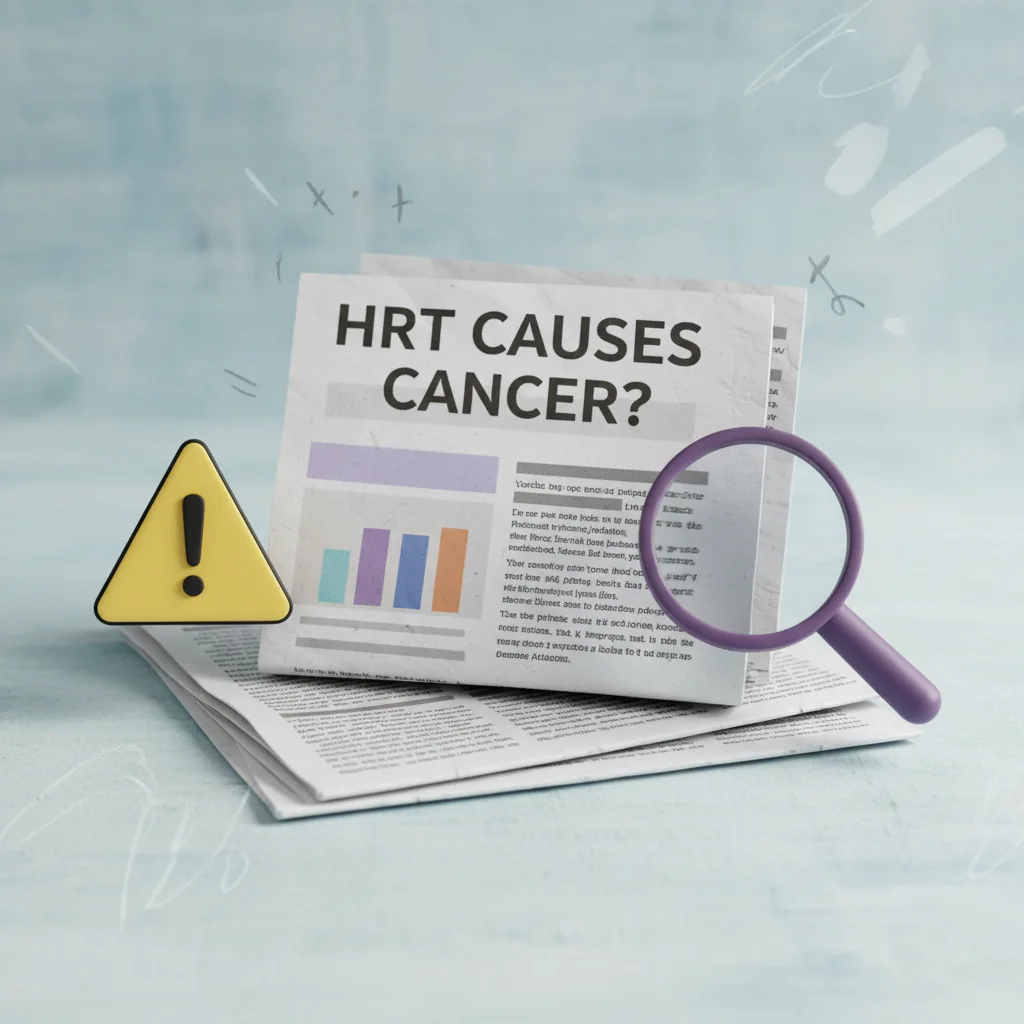
If you've asked a doctor about hormone therapy and been met with hesitation or a very serious speech about risk — that reaction came from one study. One enormously influential, widely misreported, and subsequently heavily walked back study published in 2002.

What Was the WHI Study?

The Women's Health Initiative (WHI) was a massive government-funded study of hormone therapy in postmenopausal women. In July 2002, the combined estrogen-plus-progestin trial was stopped early after it found higher rates of breast cancer, heart attack, stroke, and blood clots. JAMA, 2002 The message the public heard was simple: hormones cause cancer. Stop taking them immediately.

Women and doctors listened. Within a year, prescriptions for Prempro — the pill used in the trial — fell by 66%. JAMA, 2004 Later analyses showed the risks had been widely misunderstood, especially for younger women — but the damage was already done.

The Problems Were Significant

About two-thirds of participants were 60 or older, with an average age of about 63 — many years past menopause. JAMA, 2002 Most women who seek hormone therapy are in their late 40s or early 50s, and results from older women don't simply translate to younger ones.

Only one specific formulation was tested — a single pill combining conjugated equine (horse-derived) estrogens with a synthetic progestin, medroxyprogesterone acetate. JAMA, 2002 Yet the resulting warnings were applied to estrogen products across the board, including transdermal patches and bioidentical hormones that weren't part of the trial.

The actual risk increase was small — 8 more invasive breast cancers per 10,000 women per year, or roughly 4 additional cases per 1,000 women over five years. JAMA, 2002 Headlines emphasized the relative risk increase instead of the absolute risk, which sounds dramatically scarier.

~2/3

Of WHI combined-trial participants were 60 or older (average age about 63) — not the typical HT candidate

+4

Additional breast cancer cases per 1,000 women over about five years — the absolute risk increase

Most

Women with moderate to severe hot flashes were untreated, according to a Yale-led insurance-claims analysis Menopause, 2015

2025

The year the FDA began removing boxed warnings about heart disease, breast cancer, and dementia from hormone therapy labels FDA

What the Research Actually Shows Now

Later analyses that looked at results by age found the balance of benefits and risks looks very different for younger women. The Menopause Society's 2022 position statement concludes that for women younger than 60 or within 10 years of menopause onset, without contraindications, the benefit-risk ratio is favorable for treating bothersome hot flashes and preventing bone loss. The Menopause Society, 2022 This is often called the "timing hypothesis" or "window of opportunity."

The WHI's estrogen-alone trial, which included only women who had already had a hysterectomy, told a different story from the headlines. Estrogen lowered fracture risk, JAMA, 2004 and over long-term follow-up it was linked to fewer breast cancers, not more. JAMA, 2013 It wasn't risk-free, though: it raised stroke risk, didn't lower heart disease in that study, JAMA, 2004 and didn't prevent dementia in women 65 and older. JAMA, 2004 The fewer-breast-cancers finding got far less publicity than the 2002 scare.

What's Changed on the Label

In November 2025, the FDA announced it would remove the boxed-warning language about cardiovascular disease, breast cancer, and probable dementia from menopausal hormone therapy labels. The boxed warning about endometrial cancer stays on systemic estrogen-alone products. FDA, Nov. 2025 That was an announcement, not an overnight switch: each product's label has to be updated and approved one at a time. The FDA approved the first updated labels in February 2026, FDA, Feb. 2026 and more have followed since — but not every hormone therapy product has an updated label yet. To see which ones do, check the FDA’s current list of updated products.

The blanket fear, the knee-jerk refusal, the pat on the head and the antidepressant prescription instead? That's not medicine. That's the ghost of a 2002 press conference still haunting your doctor's office. You deserve better than that.

Newspaper headline reading “HRT causes cancer?” under a magnifying glass beside a warning sign

Section 09

What Options Women Actually Have

No, you don't just have to suffer through it. There are actual options — real ones, beyond "drink more water and try yoga."

Hormone Therapy (HT)

The most effective treatment for hot flashes and night sweats, full stop. The Menopause Society, 2022 Modern formulations look very different from what was used in the 2002 WHI study. Bioidentical hormones, structurally identical to those your body produces, are now widely available in FDA-approved forms — patches, gels, sprays, pills, and creams.

The key conversation isn't "should I be terrified of this" — it's "what type, what dose, what delivery method, and what's my personal risk profile?"

Vaginal Estrogen

Deserves its own spotlight because it's both wildly underutilized and genuinely life-changing. As estrogen drops, vaginal and urinary tissues thin and dry out — a condition called Genitourinary Syndrome of Menopause (GSM).

  • Available as a cream, vaginal tablet or insert, or ring ACOG
  • Delivers a low dose locally — The Menopause Society says a progestogen isn't needed alongside low-dose vaginal estrogen The Menopause Society, 2020
  • Carries a much lower risk profile than systemic HT
  • GSM affects an estimated 27% to 84% of postmenopausal women and is often underdiagnosed and undertreated The Menopause Society, 2020

Targeted Lifestyle Changes

Work better in combination with medical treatment. What actually helps:

  • Strength training — counteracts muscle loss and bone density reduction; improves insulin sensitivity
  • Noticing your personal triggers — stress, heat, alcohol, caffeine, and spicy food are commonly reported hot-flash triggers Cleveland Clinic
  • Consistent sleep hygiene — creates the best possible conditions for sleep
  • Stress reduction — stress can make symptoms like hot flashes, poor sleep, and anxiety feel worse

Symptom-Specific Treatments

Targeted options for specific symptoms — including non-hormonal choices for women who can't or don't want HT.

  • Hot flashes (non-hormonal): Fezolinetant (Veozah) is FDA-approved for moderate to severe hot flashes; FDA low-dose paroxetine is also FDA-approved, and other SSRIs/SNRIs and gabapentin are used off-label NIA The Menopause Society, 2023
  • Sleep: Oral micronized progesterone is a hormone therapy, not a non-hormonal option — but taken at bedtime, small trials suggest it may improve sleep quality. Scientific Reports, 2023
  • Bone density: Weight-bearing exercise, calcium, Vitamin D3 — prescription options available if loss is significant

Section 10 · Safety

When Should You See Your Doctor?

Most perimenopause symptoms are manageable and expected. But some symptoms warrant prompt medical attention. Please reach out to a healthcare provider if you experience any of the following:

Unusually heavy or prolonged bleeding
Any bleeding after menopause
Bleeding after sex
Sudden or severe pelvic pain
Severe depression or anxiety
Suicidal thoughts — please call or text 988
Palpitations with chest pain or shortness of breath
Sudden significant cognitive changes
Symptoms interfering significantly with daily life

You don't have to be in crisis to deserve care. If your symptoms are affecting your quality of life, work, relationships, or mental health — that is reason enough to seek support. Suffering is not a medical recommendation.

You're Not Done Here

Where Should You Go Next?

Wherever you are in this journey, there's a next step. Find what's most relevant for where you are right now.

Research & References

This guide draws on the organizations and studies below; specific sources are also linked beside individual claims throughout the page. We encourage you to explore these resources directly for the most current evidence.