

PERIMENOPAUSE 101:
A Beginner’s Guide to What’s Happening to Your Hormones
Jump To:
What is Perimenopause? Perimenopause is the transition before menopause, when estrogen and progesterone begin fluctuating and periods often become irregular. It can last for years before menopause officially occurs.
What's Menopause? its the one day that marks 12 months since your last period.
What's post menopause? It's everyday following the date of your last period.
Typical age range: Late 30's to mid 40's
How long can it last? 2-10 years
Menopause is reached when: 12 months have passed without a period
What Is Perimenopause?
(Why Your Body Suddenly Feels Like a Stranger)
Let me paint you a picture. You're somewhere between 38 and 45, you've been handling life just fine, and then out of nowhere your body sends you a memo that says "Changes are coming. You were not consulted."
Welcome to perimenopause.
Perimenopause is the transition phase your body goes through before you actually reach menopause. Think of it as the opening act — long, unpredictable, and honestly a little dramatic. Menopause itself is just one day: the day you've gone 12 consecutive months without a period. Everything leading up to that? That's perimenopause, and it can last anywhere from 2 to 10 years. Yes, you read that right. A decade.
Here's what's actually happening under the hood. Your ovaries start producing less estrogen, but not in a smooth, graceful way. It yo-yos. Up, down, sideways — which is exactly why your symptoms feel so all over the place. One week you're fine, the next you're sweating through your sheets at 3am questioning everything.
At the same time, progesterone — the hormone that keeps your cycle regular and helps you feel calm — starts declining too. Less progesterone means irregular periods, more anxiety, and sleep that suddenly feels like a privilege rather than a given.
Most women start noticing changes in their late 30s to mid-40s, though some start earlier or later. And because no two women are alike, symptoms vary wildly from person to person.
The most important thing to know? This is real, it is hormonal, and it is not in your head. You're not falling apart — your body is just in the middle of a very long, very inconvenient renovation.
Common Symptoms Women Experience
If perimenopause were a person, she would show up uninvited, rearrange all your furniture, eat your food, and then deny everything. And apparently? She brought friends.
Most women know about hot flashes, mood swings, and irregular periods. But the National Menopause Foundation has identified 36 known symptoms of perimenopause and menopause. Thirty-six. Let that sink in.
Here's the full guest list — starting with the ones you've probably heard of, and ending with the ones that make you Google your symptoms at 2am convinced you're dying:


The Familiar Faces:
Irregular periods: Your once-predictable cycle is now a mystery. Early, late, light, flooding — the schedule has left the building.
Hot flashes and night sweats. A wave of intense heat that rolls through your body without warning. Up to 85% of women experience hot flashes Harvard Health — so at least you're not alone, sweating through your sheets at 3am.
Sleep disruption. You fall asleep fine and then wake up at 3am staring at the ceiling mentally reorganizing your entire life. Fun!
Anxiety and mood shifts. About 40% of women experience mood symptoms during perimenopause similar to PMS Harvard Health — except unlike PMS, these don't follow a predictable schedule. Because why would they?
Brain fog. About two-thirds of women report memory complaints like forgetfulness during the menopause transition. Harvard Health You're not losing your mind. Your estrogen is just temporarily holding it hostage.
Weight changes. As estrogen levels drop, fat distribution shifts from the hips and thighs to the abdomen in the form of visceral fat The Pause Life — which isn't just a cosmetic nuisance. Visceral fat is metabolically active and raises the risk of heart disease and diabetes. Lovely parting gift.
Heart palpitations. That racing, fluttering feeling in your chest? Up to 42% of perimenopausal women experience heart palpitations, likely due to estrogen drops. Cleveland Clinic Always get cardiac symptoms checked out, but know that peri is a very common culprit.
Now — The Uninvited Guests Nobody Warned You About:
Itchy ears. Yes. Your ears. As estrogen levels decline, blood flow to the ears decreases, causing the mucous membrane inside the ear canal to dry out — leading to itching, ringing, heat or throbbing, and even earaches. MBODY You are not imagining bugs in your ears.
Tinnitus. That ringing, buzzing, humming, or clicking sound when there's nothing there? There are receptors for estradiol, progesterone, and testosterone in the cells of your ears and along your auditory pathway — and when hormone levels drop, it can affect the pathways from your ears to your brain. Dr Louise Newson
Electric shock sensations. Some women describe feeling a sudden zap or jolt — often right before a hot flash. Estrogen works closely with the nervous system, and when levels are low, it can cause misfiring of nerve signals. Dr. Jolene Brighten The clinical term is dysesthesia, and no, you're not being electrocuted. You're just perimenopausal.
Formication. This is the medical term for the sensation of insects crawling across your skin. As hormone levels fall, skin becomes thinner, loses moisture and collagen, and for some women produces an itchy, uncomfortable crawling feeling. Dr Louise Newson The word "formication" comes from the Latin formica, meaning ant. Because of course it does.
Burning mouth syndrome (BMS). About 40% of women report a burning tongue sensation during perimenopause. Midlifemakeover It can feel like you scalded your tongue on hot coffee — except nothing is hot and it just won't stop.
Gum disease and dental changes. Hormonal changes increase the risk of gum disease during perimenopause because hormones affect blood supply to the gums and the body's response to plaque buildup. Mya Care So now you have to tell your dentist about your hormones too. Great.
Dizziness. The inner ear is sensitive to estrogen — and as levels drop, its ability to keep you feeling balanced and stable becomes impaired. Midlifemakeover Spatial awareness can also be affected, which explains why you've suddenly started walking into doorframes.
Body odor changes. Sweating more from hot flashes means more odor. But there's also a lesser-known reason: a change in vaginal mucus due to declining estrogen can alter the balance of friendly microbes, changing the consistency, volume, and smell of discharge. DR.VEGAN Nobody puts that in the brochure.
Voice changes. Hoarseness, changes in pitch, or voice fatigue — especially if you present publicly or talk a lot for work. Estrogen supports the tissues of the vocal cords. When it drops, so might your vocal range. (Singers, I'm so sorry.)
Increased allergies and histamine sensitivity. Some women find they develop new sensitivities to soaps, perfumes, or foods — because declining hormones can lead to accelerated histamine production. Midlifemakeover Yes, perimenopause can turn you into a person who is suddenly allergic to their favorite perfume. Rude.
Here's the bottom line: estrogen receptors exist throughout your entire body. Your ears, your mouth, your skin, your nervous system, your gut — all of it. So when estrogen starts fluctuating wildly, anything can be affected. If something feels off and weird and you can't explain it, it is worth asking whether perimenopause could be the cause — before accepting a diagnosis of anxiety, depression, or hypochondria.
You know your body. Trust it.
What's Actually Happening to Your Hormones
Let's talk about what's actually going on inside your body — because understanding why you feel like a completely different person is genuinely helpful. And also mildly validating when your doctor looks at you like you're being dramatic.
Here's the thing nobody tells you: perimenopause isn't simply about hormones going down. It's about hormones going absolutely haywire first — spiking, crashing, and spiking again — before they eventually taper off for good. Think less "graceful sunset" and more "toddler throwing a full meltdown before finally passing out on the floor."
Progesterone Goes First
Progesterone is the quieter of the two main female hormones — the one that keeps your cycle regular, helps you sleep, and acts like your body's natural chill pill. It starts declining in your late 30s, often years before estrogen makes any dramatic moves. So before you ever notice anything obvious, your built-in calm is already running low.
Suddenly you're sleeping lighter, feeling more anxious for no clear reason, and your periods are getting a little unpredictable. Most women at this stage are told they're "just stressed." They're not just stressed. Their progesterone is quietly exiting the building.
Then Estrogen Gets Chaotic
Rather than declining in a smooth, orderly fashion, estrogen becomes wildly erratic. During early perimenopause it can actually surge higher than normal before eventually dropping — which is why your symptoms can feel so contradictory and confusing. One week your levels are elevated: hello breast tenderness, bloating, and feeling weirdly wired. The next week they've crashed: hello hot flash, low mood, and exhaustion.
Your brain — via a hormone called follicle-stimulating hormone (FSH) — keeps sending urgent signals to your ovaries, essentially saying "hello?? ovulate please??" Your ovaries hear this, try their best, and produce these erratic estrogen surges in response. Eventually though, they stop answering the phone altogether. That's menopause.
Why This Affects Literally Everything
Here's the part that explains why perimenopause feels so whole-body and overwhelming: estrogen and progesterone receptors aren't just in your reproductive system. They're distributed throughout your entire body — in your brain, your gut, your bones, your cardiovascular system, your skin. All of it.
Your brain is loaded with estrogen receptors, particularly in regions that govern mood, memory, and cognitive function. When estrogen fluctuates, so does your production of serotonin and dopamine — your feel-good neurotransmitters. That's the biochemical reason behind the anxiety, the sadness, and the brain fog. It's not a personality flaw. It's neurochemistry.
Your metabolism depends on estrogen too. It directly influences insulin sensitivity — how well your cells respond to blood sugar — and dictates where your body prefers to store fat. As estrogen drops, insulin resistance creeps up, your metabolic rate slows, and your body starts routing fat storage straight to your abdomen. This is not a willpower problem. This is endocrinology.
Your sleep is regulated in part by progesterone, which has a sedative effect on the brain through GABA receptors — the very same pathway that anti-anxiety medications target. When progesterone declines, those receptors get less stimulation, your sleep becomes fragmented and shallow, and you wake up at 3am feeling inexplicably wired and slightly furious about it.
The bottom line? This isn't one hormone doing one thing in one place. It's a cascading, interconnected system going through a significant biochemical transition — and it affects your brain, your body, your sleep, your mood, and your metabolism all at once.
You are not falling apart. You are just in the middle of one of the most complex hormonal recalibrations the human body goes through. And you deserve a doctor who understands that.


The Hormone Therapy Confusion
( How One Study Scared a Generation of Women — And Why We're Still Paying For It)
Okay. Settle in for this one. Because this is the section that might make you a little bit angry. And honestly? You'd be right to be.
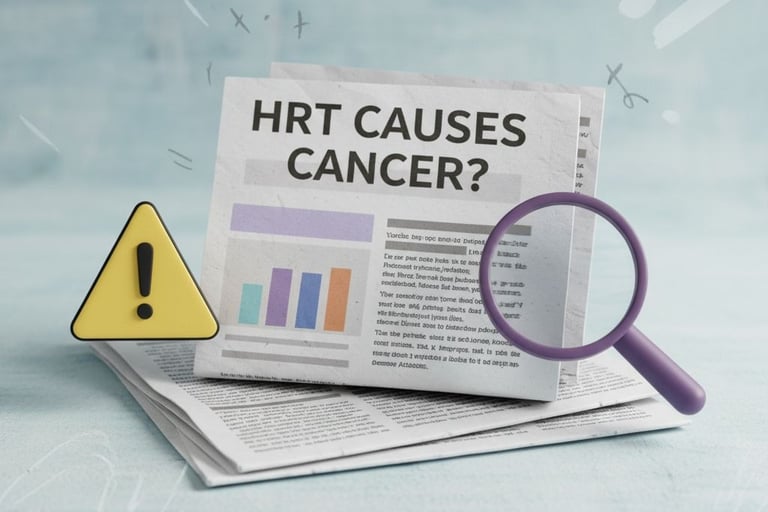
If you're in your 40s or 50s and you've asked a doctor about hormone therapy, there's a decent chance you were met with hesitation, a raised eyebrow, or a very serious speech about risk. That reaction didn't come from nowhere. It came from one study — one enormously influential, widely misreported, and subsequently heavily walked back study — published in 2002. And its shadow has been hanging over women's healthcare ever since.
What Was the WHI Study?
The Women's Health Initiative (WHI) was a massive, government-funded study launched in the 1990s to examine the long-term health effects of hormone therapy in postmenopausal women. Noble goal. Important work. Terrible execution of the results.
On July 9, 2002, the NIH held a press conference announcing it was stopping one arm of the trial early, citing increased rates of blood clots, stroke, heart disease, and breast cancer. While the study had also shown benefits — notably fewer hip fractures and cases of colorectal cancer — those findings were largely drowned out by alarming news headlines. Hone Health
Overnight, the message was clear: hormones cause cancer. Stop taking them immediately.
Doctors who had been prescribing hormones stopped practically overnight. Patients flushed their medications down the toilet. Years later, we learned the data had been misinterpreted — but the damage was already done. Hone Health
Here's What the Headlines Got Wrong
The problems with how this study was reported are numerous, and they are significant.
Problem one: the women in the study were not representative of women seeking hormone therapy. A huge segment of the 2002 study participants — 70% — were over age 60 and more than a decade past menopause. Henry Ford Health Most women who seek hormone therapy are in their late 40s or early 50s, right at the start of the transition. Studying older postmenopausal women and applying those results to younger perimenopausal women is like studying the effects of a medication on 80-year-olds and telling 50-year-olds what to expect. It doesn't translate.
Problem two: only one specific type of hormone was tested. The women in the study were given a combination of horse-derived estrogen (Premarin) and a synthetic progestin (Provera) — the type of hormones rarely prescribed today. The Pause Life Yet the resulting cancer warnings were stamped on every form of estrogen — including transdermal patches, vaginal creams, and bioidentical hormones that were never even studied.
Problem three: the actual risk increase was tiny, and nobody reported it that way. The actual risk should have been reported in terms of absolute risk — a modest increase of 4 additional cases of breast cancer per 1,000 women taking HRT over 5 years. Contemporary OB/GYN Instead, the relative risk increase was reported, which sounds dramatically scarier. This is a classic case of statistics being used to tell a story that the data doesn't actually support.
Problem four — and this one stings: the WHI study's preliminary data was leaked to the media, resulting in sensational headlines before the full context was available. The Pause Life Fear and sensationalism got there first, and science never quite caught up in the public conversation.
What the Research Actually Shows Now
Over the past two decades, researchers have gone back and looked at this data very carefully — and the picture is far more nuanced.
Women in the estrogen-only arm of the study — those without a uterus who took estrogen alone — showed no statistically significant increase in breast cancer risk. In fact, the incidence of breast cancer decreased for these women compared to the control group. They also saw lower risk of Alzheimer's disease, osteoporosis, and cardiovascular disease — but these benefits didn't get much publicity. The Pause Life
A follow-up analysis revealed that healthy women who start HRT before age 59 or within 10 years of menopause actually have a decreased risk of heart disease compared to those who don't take HRT. Carrot This is now known as the "timing hypothesis" or "window of opportunity" — and it's a significant finding that changes the entire risk-benefit conversation.
A re-analysis of the WHI data concluded that HRT is associated with improved quality of life, reduced risk of coronary heart disease and death when started before age 60, reduced risk of colorectal cancer, reduced risk of dementia when started early, and decreased risk of fracture. Contemporary OB/GYN
And yet? According to a Yale University study examining insurance claims from over 500,000 women, while 60% of women with significant menopausal symptoms sought medical assistance, more than 75% went untreated. The Pause Life
The Bottom Line
Here's where I get a little fired up, woman to woman. The International Menopause Society believes that the decline in HRT use following the 2002 study "has disadvantaged nearly a decade of women who may have unnecessarily suffered severe menopausal symptoms and who may have missed the potential therapeutic window to reduce their future cardiovascular, fracture, and dementia risk." Contemporary OB/GYN
A generation of women were undertreated, under-supported, and sent home to white-knuckle their way through a very real hormonal crisis — because one study was misrepresented by headlines and then never properly corrected in the medical mainstream.
Hormone therapy is not right for every woman. There are real contraindications, real individual risk factors, and real conversations to have with a qualified provider. But the blanket fear? The knee-jerk refusal? The pat on the head and the antidepressant prescription instead?
That's not medicine. That's the ghost of a 2002 press conference still haunting your doctor's office.
You deserve better than that.
What Options Women Actually Have
(No, You Don't Just Have to Suffer Through It)
After everything you just learned in that last section, you might be feeling a little cheated. Maybe a lot cheated. That's valid. But here's the good news: there are actual options available to you — real ones, beyond "drink more water and try yoga."
Let's walk through them.
Hormone Therapy (HT)
This is the most effective treatment for moderate to severe perimenopause symptoms, full stop. It comes in multiple forms — patches, gels, sprays, pills, and creams — and modern formulations look very different from what was used in the 2002 WHI study we just dissected. Bioidentical hormones, which are structurally identical to the hormones your body produces naturally, are now widely available in FDA-approved forms. The key conversation to have with your provider isn't "should I be terrified of this" but rather "what type, what dose, what delivery method, and what's my personal risk profile?" Those are the right questions.
There's also an important distinction between systemic hormone therapy — which treats whole-body symptoms like hot flashes, brain fog, and mood — and local vaginal estrogen, which we'll get to in a moment. They are not the same thing, and one does not automatically mean the other.
Vaginal Estrogen
This one deserves its own spotlight because it is both wildly underutilized and genuinely life-changing for a lot of women. As estrogen drops, the tissues of the vagina and urinary tract thin out, dry out, and become inflamed — a condition called Genitourinary Syndrome of Menopause (GSM). Symptoms include vaginal dryness, painful sex, recurrent UTIs, urinary urgency, and general pelvic discomfort.
Vaginal estrogen — available as a cream, ring, or suppository — delivers a very low dose of estrogen locally, directly to the tissue that needs it. It is not significantly absorbed into the bloodstream, which means it carries a much lower risk profile than systemic hormone therapy. Most major medical organizations consider it safe even for women who can't use systemic HT. And unlike systemic HT, GSM does not get better on its own over time — it actually gets worse without treatment. This one matters, and too many women are suffering in silence because nobody told them it existed.
Lifestyle Changes
Before you roll your eyes — I hear you. "Eat better and exercise more" is not the revolutionary advice any of us were hoping for. But the honest truth is that certain lifestyle adjustments do make a measurable difference in symptom severity, and they work better when combined with medical treatment rather than used as a substitute for it.
What actually helps:
Strength training is particularly important during perimenopause because declining estrogen accelerates muscle loss and bone density reduction. Lifting weights — even light ones — counteracts both. It also improves insulin sensitivity, which helps with the stubborn weight gain around the middle.
Reducing alcohol and refined sugar can significantly reduce hot flash frequency and intensity. Nobody likes hearing this. It's still true.
Prioritizing sleep hygiene — consistent sleep and wake times, cool bedroom, no screens before bed — won't cure hormonal insomnia but it creates the best possible conditions for sleep to happen.
Stress reduction practices like breathwork, meditation, or even just regular walks genuinely affect cortisol levels, which interact directly with sex hormones. When cortisol is chronically elevated, it competes with and depletes progesterone. Managing stress isn't just self-care fluff — it's biochemistry.
Protein intake becomes increasingly important after 40. Aim for adequate protein at every meal to support muscle maintenance, blood sugar stability, and satiety. Your body is less efficient at using dietary protein as you age, so you actually need more of it, not less.
Symptom-Specific Treatments
Not every woman wants or is a candidate for hormone therapy, and that's completely okay. There are targeted, non-hormonal options for specific symptoms worth knowing about.
For hot flashes: Non-hormonal prescription options include fezolinetant (Veozah) — an FDA-approved neurokinin receptor antagonist that targets the brain pathway responsible for hot flashes — as well as low-dose antidepressants like SSRIs and SNRIs, and gabapentin, which can help with both hot flashes and sleep disruption.
For sleep: Beyond sleep hygiene, some women benefit from low-dose melatonin, magnesium glycinate, or — when prescribed appropriately — short-term sleep aids. If progesterone is part of your hormone therapy plan, oral progesterone taken at bedtime has a natural sedative effect, which is genuinely one of its better side effects.
For mood and anxiety: If hormones are the root cause of your anxiety and mood shifts — and often they are — treating the hormonal imbalance directly tends to work better than layering antidepressants on top of an untreated hormonal problem. That said, some women do benefit from SSRIs or SNRIs during this transition, and there is zero shame in that. You use what works.
For bone density: Weight-bearing exercise and adequate calcium and Vitamin D3 intake are foundational. If bone loss is already significant, your provider may discuss prescription options like bisphosphonates.
For joint pain and inflammation: Omega-3 fatty acids, anti-inflammatory eating patterns, and regular movement all help. Magnesium is also consistently underrated for muscle cramping, inflammation, and sleep.
The most important thing to take away from this section is that you have choices. Perimenopause doesn't have to be a decade-long endurance test. The goal is to find the combination of approaches that works for your body, your history, and your life — ideally with a provider who actually listens to you. Which brings us neatly to the next section.


Empowerment
Inspiring wellness tools for women’s health journeys.
Wellness
Healing
© 2025. All rights reserved.
Some pages on this site may contain affiliate links. If you purchase through these links, we may earn a small commission at no extra cost to you. We only recommend products we trust and believe provide value to our readers.